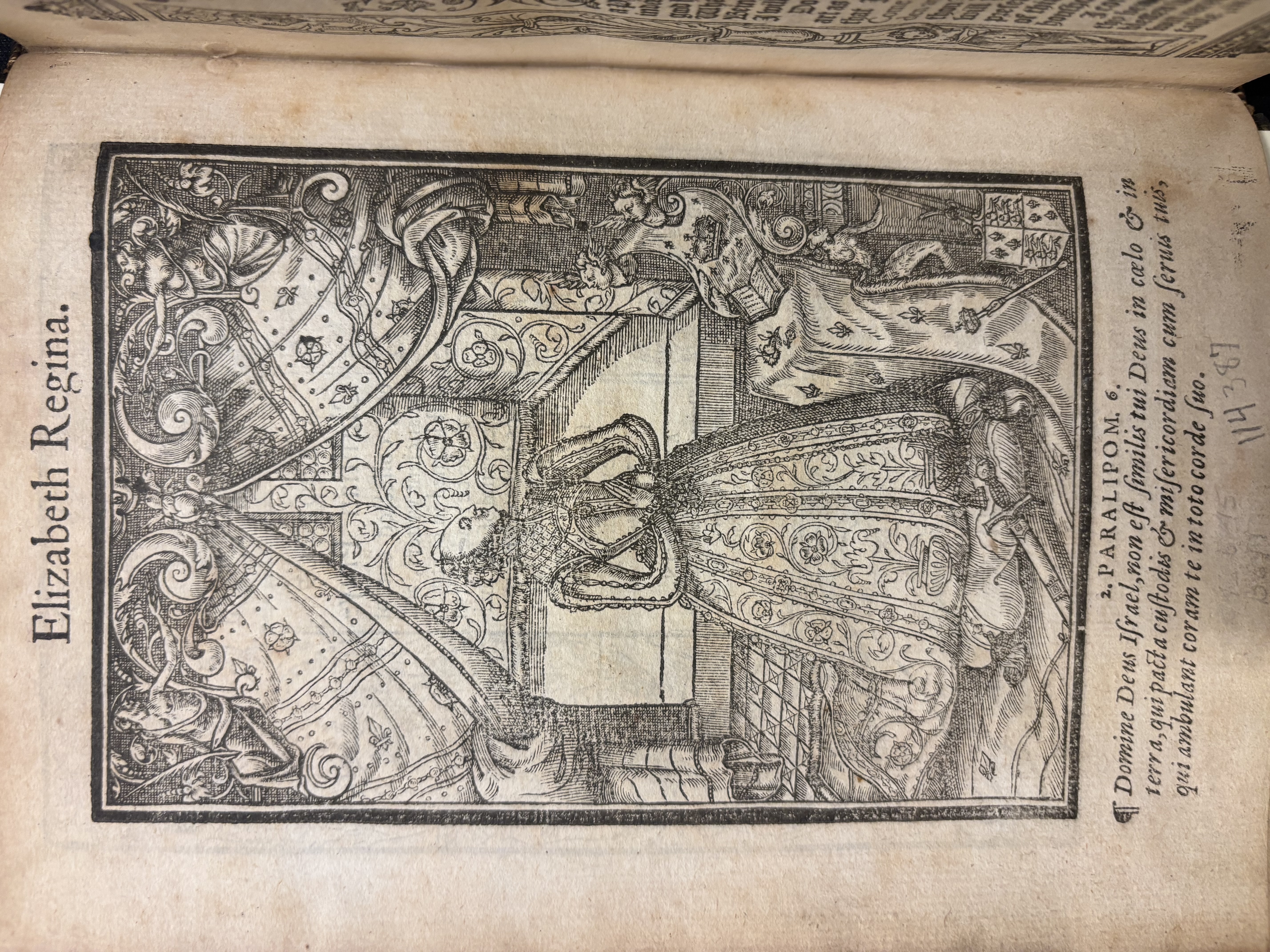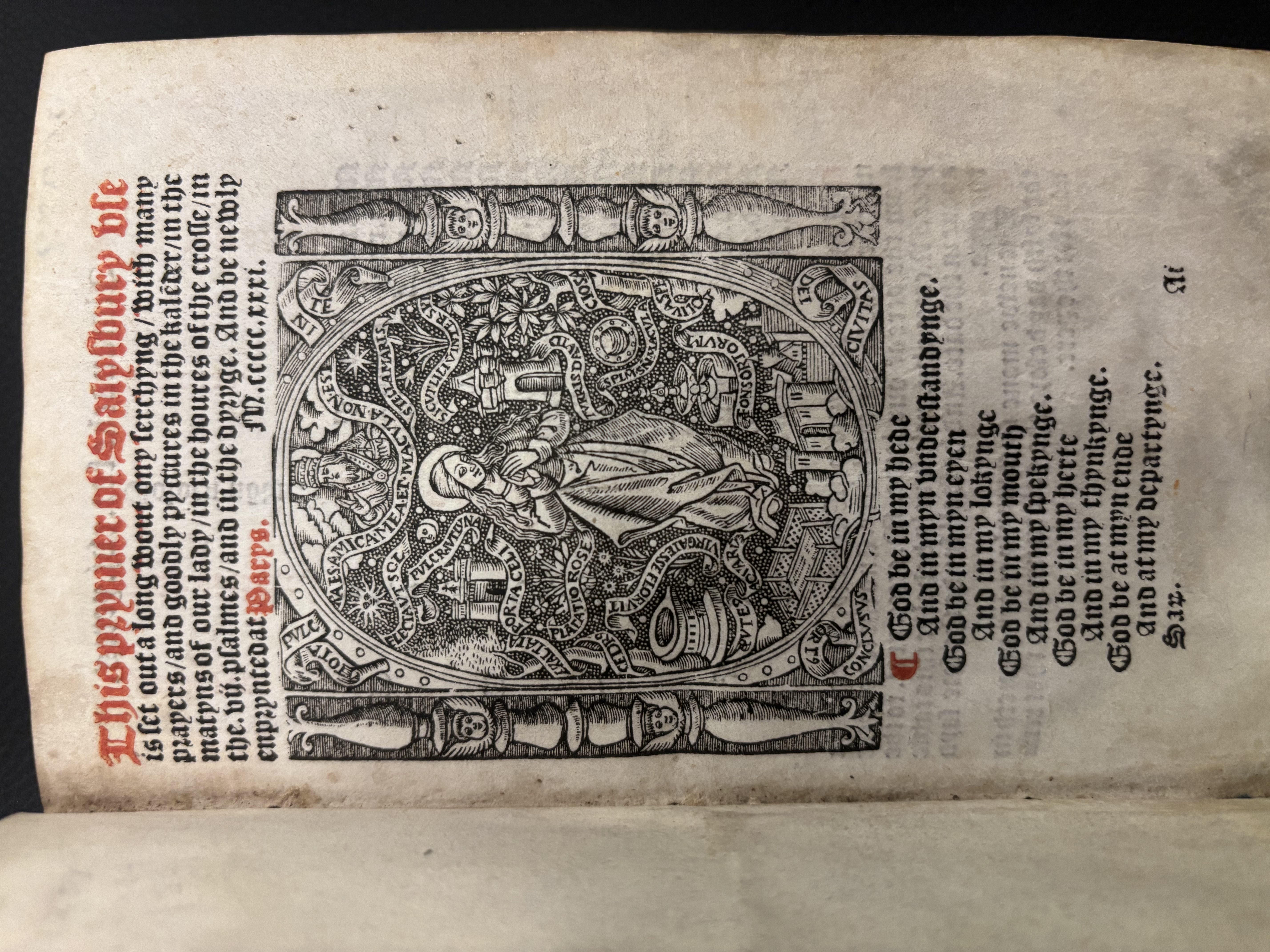
"Private Prayers: Lay Devotion in Tudor England" is a new display right outside the Bishop Payne Library's rare book room. Drawing on materials from both the VTS and GTS collections, it tells the story of sixteenth-century English lay devotion beyond the Book of Common Prayer. The books on view trace how primers and other prayer books became contested sites of reform, vernacularization, and spiritual practice across a century of reformation.
At the heart of the display is the primer: the lay prayer book that shaped devotional life for many English Christians before and alongside the rise of the Book of Common Prayer. Visitors will encounter early Tudor Sarum primers printed in Paris and London, books that preserve the familiar structure of the late medieval book of hours even as English begins to move more fully onto the page. Later primers demonstrate features that align with the concerns of the Henrician church and the development of London printing. As the display shows, the English Reformation did not simply replace older devotional practices with new ones. It worked by revising inherited books and prayer forms for new religious purposes.
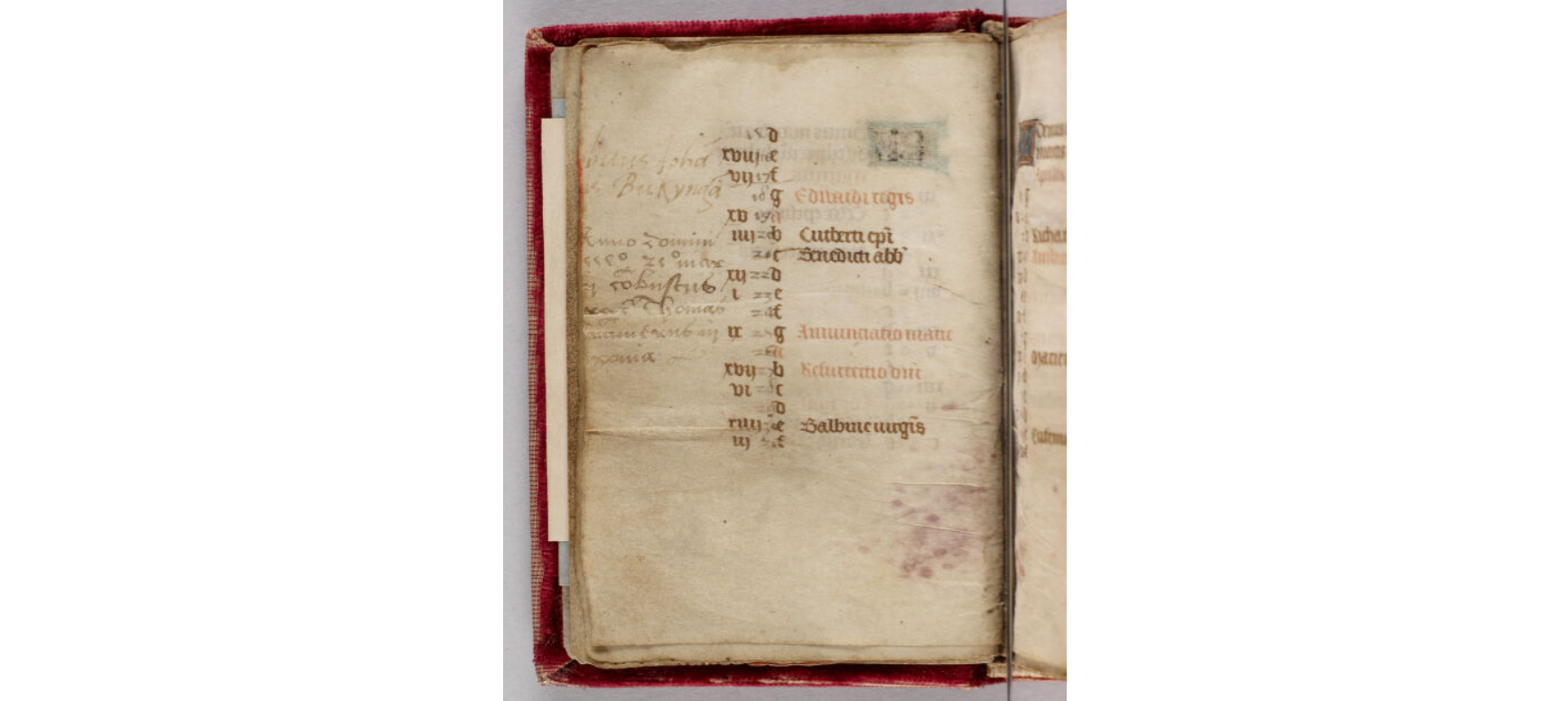
One of the most extraordinary items in the display is a fifteenth-century manuscript book of hours that remained in active use throughout the English Reformation. Its pages preserve erasures, additions, and annotations that make visible the pressures of reform and reversal in a singular book across over 150 years. A late 16th century hand even added Cranmer, Ridley, and Latimer to the calendar of saints, a Protestant addition to an originally Catholic book which suggests the books in the display do not tell a simple Catholic vs. Protestant story.
Visit this page for a brief audio guide and images of the manuscript Book of Hours.
Listen to the Book of Hours audio guide and view manuscript images
Other works in the display show what happened after the primer: Miles Coverdale's Letters of the Marian Martyrs, devotional books associated with Elizabethan private prayers, Edmund Bunny's Protestant reworking of Jesuit exercises, William Perkins on spiritual struggle, and William Hunnis's metrical rendering of the Penitential Psalms. Lay devotion remained at once inventive, inward, and deeply shaped by inherited prayer forms throughout the Tudor period.
The display was curated by Vincent Williams, User Services Librarian. Beth Lewis, the library's book conservator, restored several of the items so they could be safely displayed. "Private Prayers: Lay Devotion in Tudor England" will remain up through September 2026.
The library's rare book collection is open for research. Reach out to the library, and we'll help you develop a research plan using rare books and identify which books might match your existing curiosities or questions. Use the Ask-A-Librarian form to begin a conversation.
Selected Item Images: