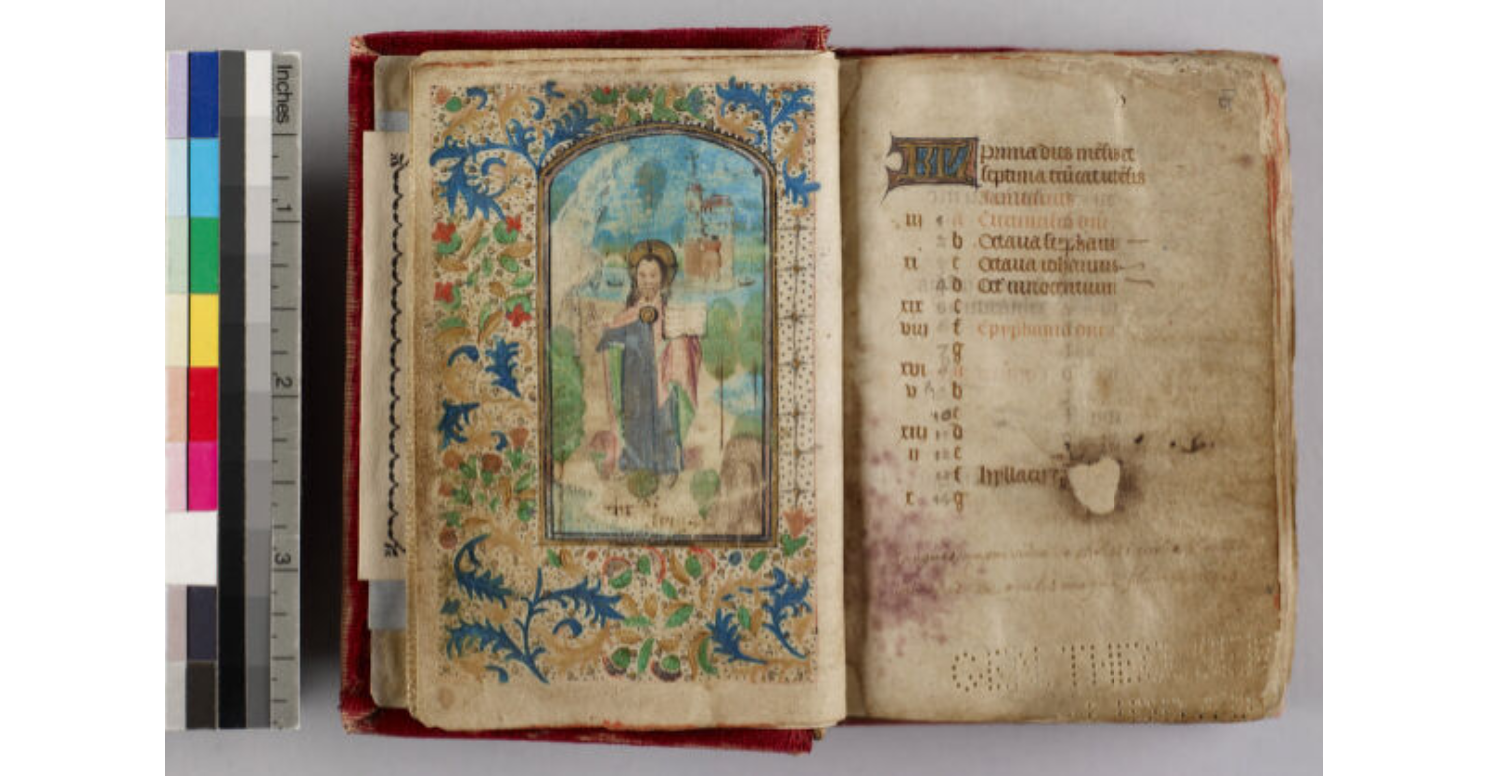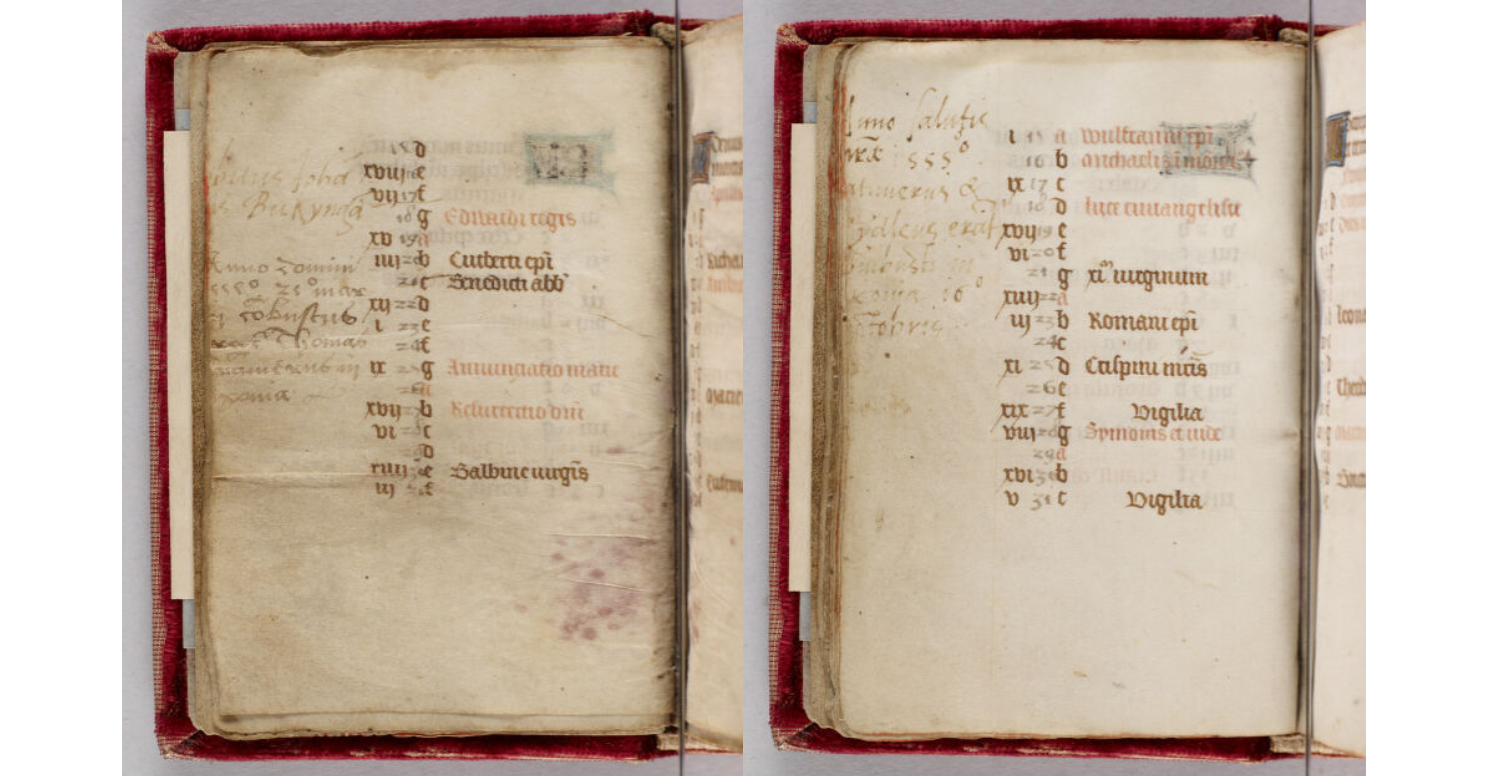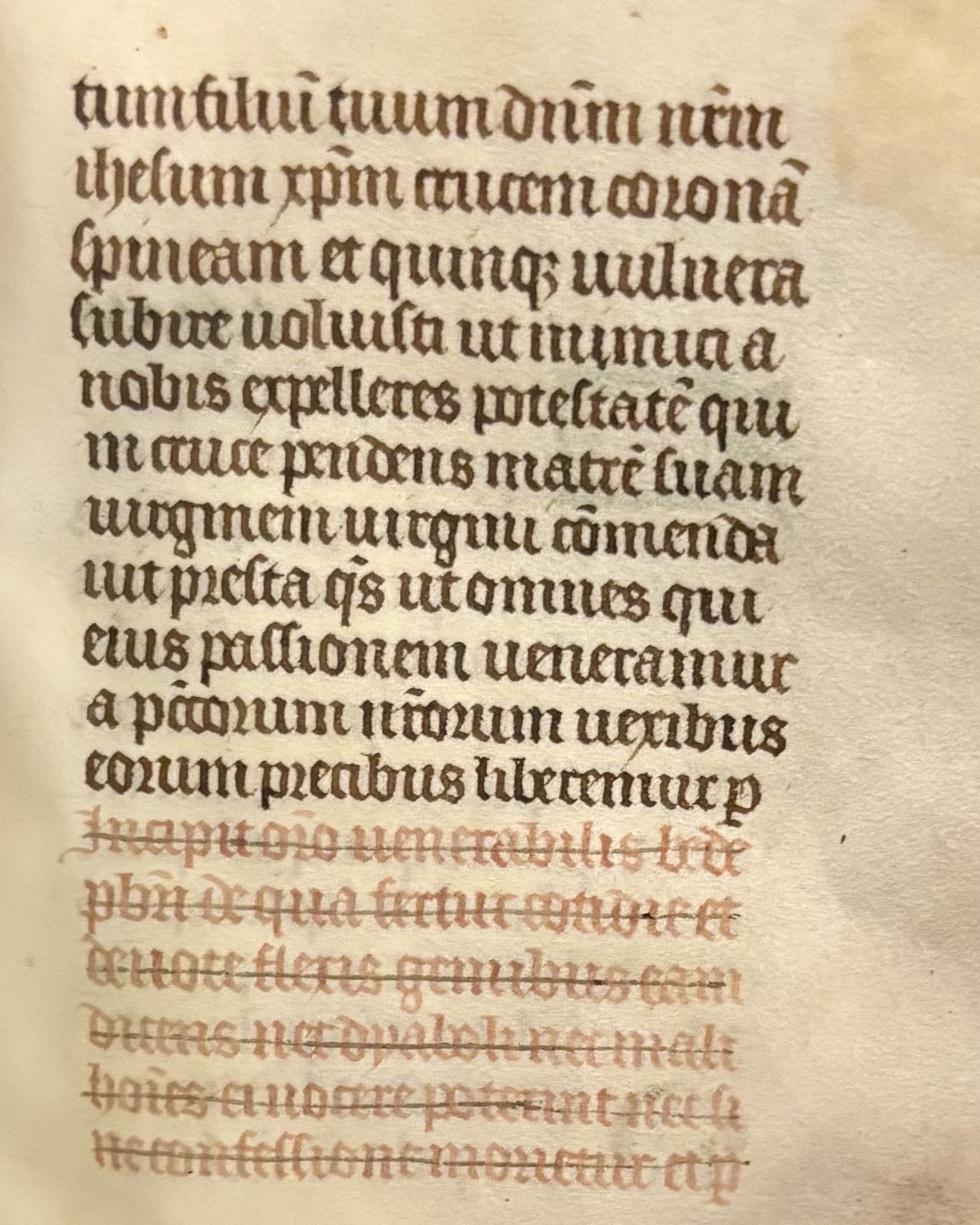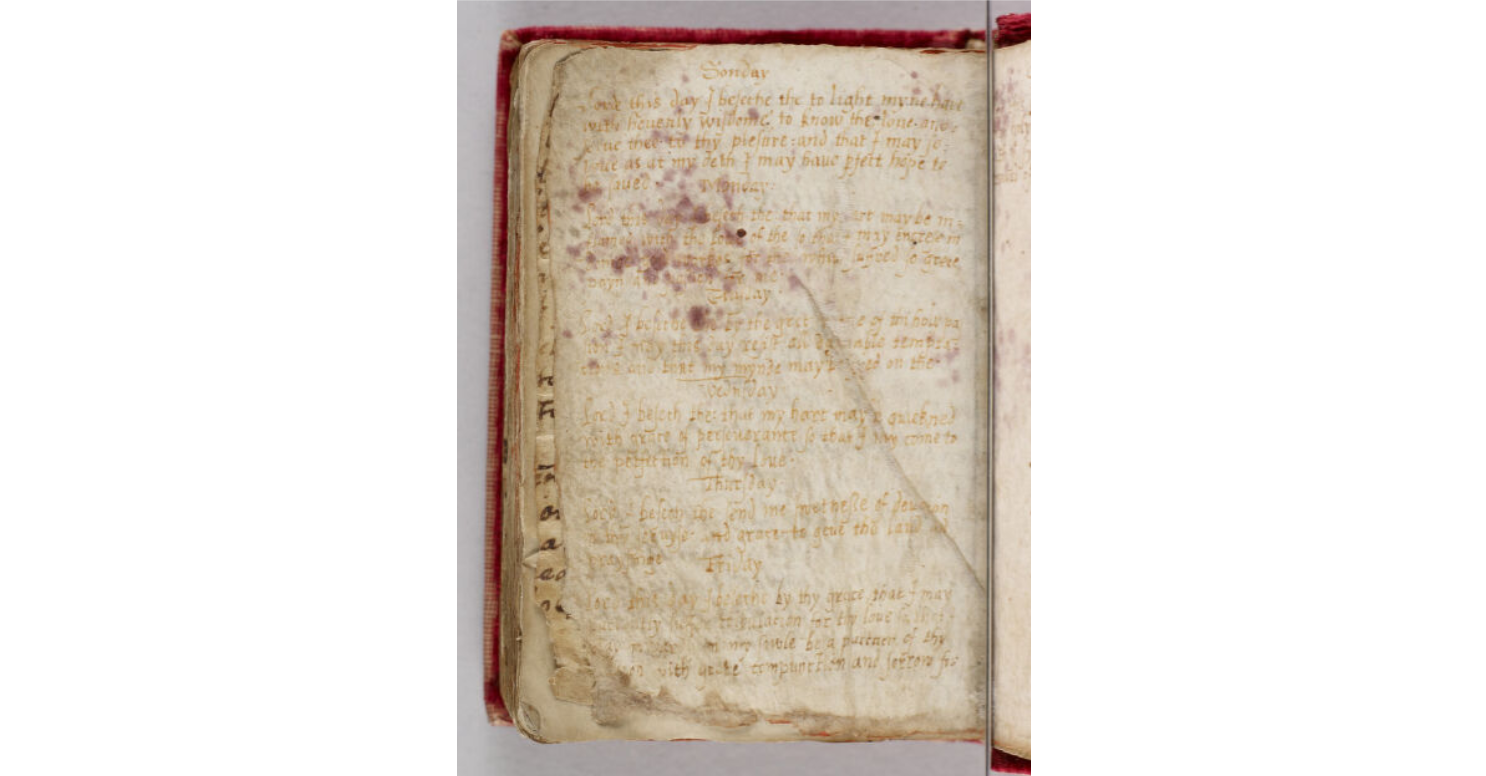
This curator’s audio guide accompanies the manuscript Book of Hours on display in Private Prayers: Lay Devotion in Tudor England. The book is open to a later calendar addition recording the death of Thomas Cranmer, but the note is small, faded, written in Latin cursive, and partly cropped. The images below provide a closer look at several later additions and cancellations discussed in the audio.
Listen
Audio guide by Vincent Williams, User Services Librarian and curator of the display. Length: 4 min. 21 sec.
Read the transcript
I’m Vincent Williams, User Services Librarian at the Bishop Payne Library and curator of Private Prayers: Lay Devotion in Tudor England. I want to draw your attention to the most extraordinary object in the display: this small manuscript Book of Hours, made in France in the later fifteenth century for use in England.
Before the Book of Common Prayer, books like this helped lay Christians structure their prayers and give religious shape to daily life. Books of Hours gathered calendars of saints, the Hours of the Virgin, penitential psalms, and other devotions into a portable format.
This copy is truly remarkable because of its long afterlife. It did not stay fixed in the world that first made it. Later users changed it.
During Henry VIII’s reign, references to papal authority and Thomas Becket were crossed out, reflecting royal injunctions against Becket. Indulgence notices before certain prayers were also crossed out. These notices promised spiritual benefits for saying particular prayers, and they belonged to the devotional world that the Reformation increasingly challenged. But many of the cancellations are only partial. It was still possible for later users to read the underlying text. The book had been altered enough to show compliance, but not so thoroughly that the older devotional world disappeared.
Still later, another hand recorded the deaths of three Protestant martyrs in the calendar of saints: Cranmer, Ridley, and Latimer. This was an extraordinary act.
A calendar originally filled with traditional saints now also commemorated Protestants executed under the Catholic Queen Mary, as witnesses to true faith. The calendar helped readers organize the year. It told them whose feast days to remember. Adding Cranmer, Ridley, and Latimer is not a casual note. It placed Protestant martyrs into the very framework that had once organized devotion to traditional saints.
Look at the book. It is open to the calendar entry for Thomas Cranmer. The note is small, faded, and partly cropped, so you may not be able to make it out.
Imagine a later reader turning to these same pages and finding traditional saints alongside new Protestant martyrs sharing the same devotional space.
By the end of the sixteenth or early seventeenth century, the book was no longer simply a medieval Latin prayer book. It had become an object of household devotion. Another user around this time added in English prayers for each day of the week on the back inside cover for quick recitation.
There are at least three or four different hands at work in this book, and we cannot assume they were all members of the same family. But this book shows how a single Book of Hours could survive generations of religious upheaval by being corrected, supplemented, and reinterpreted by its users.
Many Books of Hours were destroyed, altered, rebound, or corrected, and then lost to history. Here, all these layers remain in an unusually visible form. What is unusual is not that devotional books changed hands, gathered additions, or were corrected over time. That happened often in the sixteenth century. What is unusual here is how visible these layers remain, and how sharply confessional some of them are.
It is a record of Tudor readers living with inherited devotion during a century of reform.
Look Closer
These close-up images show details that may be difficult to see clearly in the display case.